
Prove one route works before adding wrong turns
Start your CLONE BUILDERS maze with a clear entrance and exit, then focus the first design exercise on one route between them. Test the actual layout before adding branches. A confusing arrangement of wall-like shapes is not automatically a playable maze. Check the current controls before expecting a built-in maze generator or a guaranteed maze command.
Your first goal is solvability. Another player should be able to reach the agreed exit through a route the finished creation supports. Once that works, you can decide how much uncertainty to add around it.
Define the entrance, exit, and intended path
Before starting, describe where a player begins, where the challenge ends, and which broad direction connects those points. A modest layout is easier to inspect than a huge labyrinth with many similar junctions. Keep the initial goal simple enough that you can recognize its structure as the clones work.
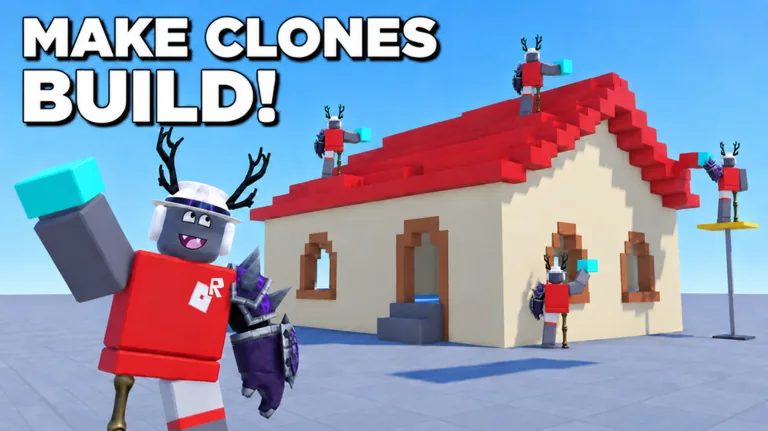
Use the current experience’s controls for the actual idea. NPC clones place, resize, move, and assemble parts through an experimental structured system. Treat the design as a test, not a promise that every corridor and doorway in your description becomes usable.
| Maze element | First goal | Test after construction |
|---|---|---|
| Entrance | One obvious beginning | Can a new player identify it? |
| Main path | A route connecting both ends | Can the route actually be followed? |
| Exit | One agreed destination | Is completion unambiguous? |
| Branches | Extra decisions after the route works | Do they create choices rather than blocked confusion? |
Walk the actual layout from start to finish
Let the construction develop before testing passages that are still changing. Once you inspect the result, follow the route slowly. Look for apparent openings that do not provide access, sections that lead outside the agreed challenge, and junctions where the next choice is impossible to read.
A layout looking connected from above is different from a route that works for a player inside it. Judge both. If the main route is not usable, simplify the next goal around that connection instead of adding more branches to disguise the problem.
Keep one clear observation from the test. If the exit is hard to distinguish, address its design. If the middle passage does not connect, focus on access. Use that specific problem to choose the next attempt.
Add decisions without hiding the rules
After the main path works, choose one additional branch or a more distinctive junction as the next design goal. You do not need to fill every space with a dead end. The challenge becomes more readable when players understand what a corridor and a junction look like in the actual layout.
Ask someone who did not plan the maze to try it without coaching. Watch where they hesitate and whether they can explain why they chose a route. Their confusion can reveal unclear structure rather than useful difficulty. Change one design priority before the next comparison.
Run a fair player-made challenge
Agree on the start, exit, and what happens when someone leaves the intended area. Decide whether players take turns. If you record completion times or attempts, keep the same method for everyone; this is manual group organization, not an automatic scoring feature.
The developer recommends a private server for minigames and large builds. Check current availability and group access on Roblox before arranging the session. Read the minigame planning guide for rules, or the obstacle-course exercise when you want the route’s challenge to come from individual obstacles instead of branching choices.
FAQ
Is there a confirmed automatic maze generator?
Check the current game interface for available features rather than assuming a generator exists. Test the actual construction result.
What should the first maze test contain?
An obvious entrance, a reachable exit, and one usable path between them. Add branching decisions only after that connection works.
How do I tell difficulty from confusing design?
Ask a new player to try the layout without coaching. Watch whether they understand the passages and rules even when they choose the wrong branch.
Can the group automatically track completion times?
Do not assume an automatic timer exists. If the group records times manually, agree on one consistent method and a clear finish.